For graphic designers, a drawing tablet can affect precision, color judgment, editing efficiency, and overall comfort. The right choice depends on your workflow, whether you focus on illustration, branding, photo retouching, animation, or layout design. Therefore, choosing the best drawing tablet for graphic designers should be based on key specifications and actual workflow needs rather than popularity alone. This guide covers the main factors to consider and when a pen display can be a practical choice for creative work.
What Should Graphic Designers Look for in the Best Drawing Tablet for Graphic Designers?
1. Pen Accuracy and Pressure Sensitivity
Pen performance is one of the most important factors for graphic designers. Look for accurate tracking, consistent strokes, and sufficient pressure sensitivity for your preferred software. A responsive pen can make freehand drawing, retouching, and brush-based work feel more natural and precise.
2. Display Size and Working Area
The ideal screen size depends on how and where you work. Larger displays provide more room for detailed projects, while smaller models are easier to transport and require less desk space. Consider your workspace, monitor setup, and portability needs before choosing a size.
3. Screen Quality and Color Accuracy
For illustration, branding, photo editing, and other color-sensitive work, display quality deserves careful attention. Resolution, color gamut, color depth, brightness, and viewing angles can all affect how accurately you see your work. A good display should provide sharp details, consistent colors, and smooth gradients.
4. Compatibility and Connectivity
Before buying, check whether the tablet works with your operating system and creative software. Connection options are also important if you switch between computers or need a portable setup. Good compatibility helps the tablet integrate smoothly into your existing workflow.
5. Finding the Right Balance of Features
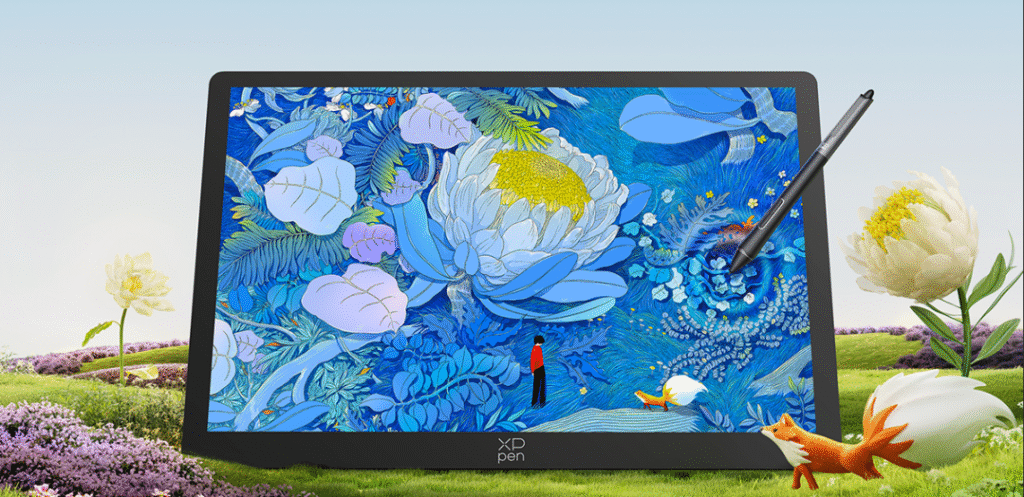
No single specification determines whether a tablet is right for a designer. When choosing the best drawing tablet for graphic designer workflows, it is more useful to consider how different features work together. For example, the XPPen Artist Ultra 14 combines a 14-inch AMOLED display, 2880 × 1800 resolution, native 10-bit color, 99% Adobe RGB/sRGB/Display P3 coverage, and a 90 Hz refresh rate. It also supports 16,384 pressure levels and weighs 720 g, offering a balance of display quality, pen responsiveness, and portability. It supports Windows, macOS, Android, ChromeOS, and Linux, although available features may vary by platform.
Why Choose a Pen Display for Graphic Design?
1. Direct-on-Screen Workflow
A pen display lets designers draw directly on the screen, creating a more natural connection between hand movement and the artwork. This can be especially useful for freehand drawing, image retouching, and detailed editing. For many users, the best drawing tablet for graphic designer workflows is one that provides direct and intuitive control.
2. A Comfortable Workspace for Creative Projects
A high-resolution display makes it easier to view fine details and work comfortably on complex projects. Features such as full lamination, anti-glare surfaces, and larger viewing areas can also improve the overall drawing experience during longer sessions. For example, some 14-inch pen displays offer 2.8K resolution and OLED panels for sharper, more immersive visuals.
3. Responsive Pen Performance
Pen responsiveness plays an important role in creating smooth and controlled strokes. A higher refresh rate can make pen movement feel more fluid, while advanced stylus technology and higher pressure sensitivity allow for better control over line weight and brush intensity. These features are particularly useful for illustration, retouching, and detailed graphic work.
4. A Clear and Color-Accurate Display
For graphic designers, display quality involves more than resolution. Color gamut, color depth, and color accuracy are also important when working on professional visual content. A pen display with wide color coverage and 10-bit color can provide richer colors and smoother gradients, making it a better choice for projects where accurate color reproduction matters.
See also: Explore How Renovated Booth Seating Enhances a Restaurant’s Reputation in Indianapolis
Who Should Choose the Best Drawing Tablet for Graphic Designer?
1. Designers Who Prefer Direct-on-Screen Drawing
If you naturally prefer looking directly at the point where your hand touches the artwork, a pen display can provide a more intuitive experience. This is particularly useful for designers who frequently create or refine freehand elements.
2. Designers Who Frequently Work with Freehand Graphics
Illustration, custom lettering, textured artwork, masking, and brush-based design can all benefit from pressure-sensitive input. A broad pressure range allows subtle changes in stroke behavior, which can be difficult to reproduce with conventional mouse control.
3. Designers Who Need More Precise Image Editing
Photo retouching often requires controlled brush movements and localized adjustments. Working directly on the image can make it easier to judge the position and scale of each edit. For this reason, the best drawing tablet for graphic designers should be selected according to the amount of hands-on image manipulation required.
4. Designers Looking for a More Immersive Creative Workflow
Designers who prefer a more direct and intuitive way to work may benefit from a pen display. Drawing directly on the screen can make freehand creation, editing, and visual adjustments feel more natural. It can also reduce switching between a tablet and monitor, helping designers stay focused during longer creative sessions.
When Is a Traditional Pen Tablet a Better Choice?
1. When Portability Is a Priority
A traditional pen tablet does not include an integrated display, which can make it lighter and easier to pair with an existing laptop or monitor. If your priority is carrying minimal equipment, a screenless model may be a better “best drawing tablet for graphic designer” solution.
2. When You Have a Limited Budget
A traditional pen tablet can provide pressure-sensitive input without requiring you to purchase a second high-quality display. For designers who already own a well-calibrated monitor, this may offer better value.
3. When You Mainly Work on Layout and Typography
Graphic designers focused on typography, grids, vector layouts, and interface controls may not need to draw directly on the screen. A separate monitor combined with a traditional tablet can provide an efficient workspace for these tasks, and may be a better fit when choosing the best drawing tablet for graphic designer workflows.
4. When You Already Prefer a Separate Display
Some professionals prefer using a large desktop monitor for color-critical work while keeping the drawing tablet as a dedicated input surface. In this situation, monitor calibration, desk ergonomics, and software efficiency may matter more than the tablet’s integrated display.
Conclusion
Ultimately, choosing the best drawing tablet for graphic designer comes down to matching the device with your specific workflow and creative needs. Consider the type of work you do most often, how important pen accuracy and color performance are, whether you need a portable setup, and how much screen space you prefer. By weighing these factors alongside compatibility, ergonomics, and budget, designers can find a tablet that supports a more precise, efficient, and comfortable creative process without paying for features they may not actually need.