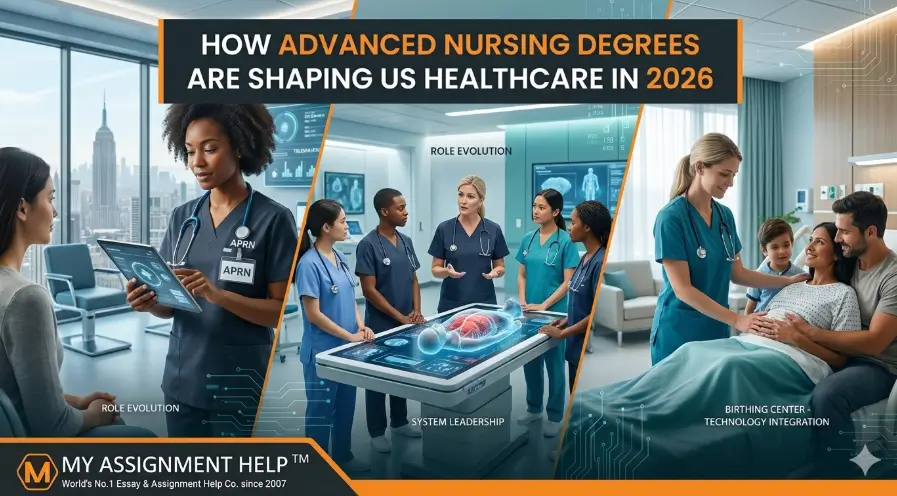
The United States healthcare landscape in 2026 stands at a critical juncture. Driven by an aging population, a persistent physician shortage, and the rapid integration of artificial intelligence, the role of the nurse has evolved from a supportive clinical function to a primary pillar of healthcare leadership. Advanced nursing degrees—specifically the Master of Science in Nursing (MSN) and the Doctor of Nursing Practice (DNP)—are no longer just academic milestones; they are essential credentials for navigating a system that demands high-level clinical decision-making and administrative oversight.
As the complexity of patient care intensifies, many graduate students find that the academic rigor required to earn these credentials is immense. This is particularly true for the final research phase, where many seek professional nursing dissertation help through platforms like myassignmenthelp to ensure their Evidence-Based Practice (EBP) projects meet the rigorous standards of the American Association of Colleges of Nursing (AACN). By bridging the gap between clinical expertise and scholarly writing, these resources enable future leaders to focus on systemic improvements while maintaining academic excellence.
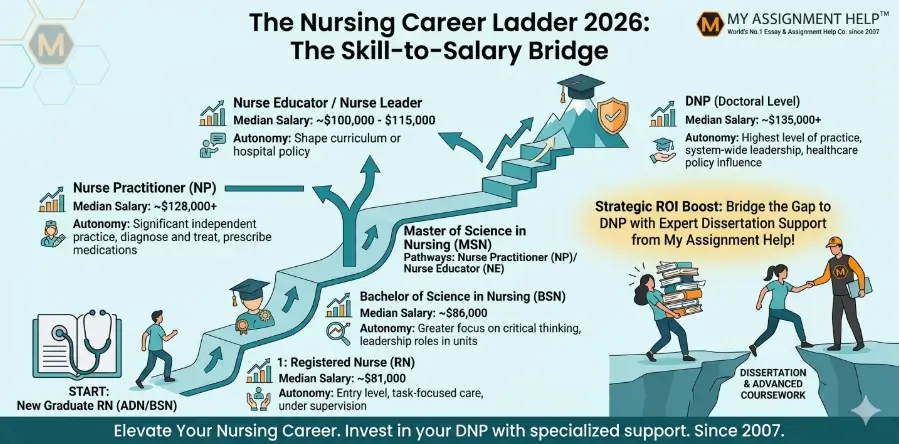
Visual Proof: The 2026 Nursing Impact Stack
- 350,000+: Projected RN Shortage by 2026.
- 46%: Growth in NP Roles (2022-2032).
- $128k+: Median Salary for Advanced Practice.
Sources: U.S. Bureau of Labor Statistics & AACN 2026 Projections.
The Rise of the Nurse Practitioner as Primary Care Provider
In 2026, the traditional model of the physician-led clinic is being augmented by nurse-managed health centers. With the U.S. facing a shortage of up to 86,000 physicians by 2036, Advanced Practice Registered Nurses (APRNs) have stepped into the breach. Full Practice Authority (FPA) is now the standard in over 30 states, allowing NPs to evaluate patients, diagnose ailments, and prescribe medications without physician oversight. This shift is not merely about filling a gap; it is about the “Nursing Model” of care—which emphasizes holistic wellness and patient education—outperforming the traditional “Medical Model” in chronic disease management and patient satisfaction scores.
Nursing Informatics and AI Integration
Advanced degrees are also pivoting toward Nursing Informatics. In 2026, the integration of AI-driven diagnostic tools and remote patient monitoring requires a workforce that understands both pathophysiology and data science. Nurses with advanced degrees are now the “translators” in the hospital setting, ensuring that technological implementations do not compromise the human element of care. They lead the development of predictive algorithms that identify sepsis or cardiac distress hours before clinical symptoms appear, drastically reducing hospital mortality rates.
The Doctorate of Nursing Practice (DNP) and Policy Leadership
The DNP degree has become the gold standard for clinical leadership. Unlike PhDs, which focus on original research, the DNP focuses on translating research into clinical practice. In 2026, DNP-prepared nurses are sitting on hospital boards and influencing federal healthcare policy. They are tackling the “Social Determinants of Health” (SDOH) by designing community-based interventions that address housing, nutrition, and transportation, recognizing that health happens largely outside the hospital walls.
Given the heavy workload of these terminal degrees, including the need for complex data analysis and policy drafting, it is common for students to reach out to professional services to pay someone to do my assignment. This allows them to balance high-stakes clinical residencies with the intensive writing requirements of a doctoral program, ensuring that their final contributions to the field are both polished and impactful.
Key Takeaways for 2026
- Autonomy: More states are granting Full Practice Authority, making APRNs the face of primary care.
- Tech-Fluent Care: Informatics is now a core competency, with nurses leading AI integration in clinical settings.
- Educational Shift: The DNP is increasingly becoming the required entry-level degree for advanced practice roles.
- Economic Impact: Advanced nursing roles are seeing significant salary growth as demand outstrips supply in specialized fields.
See also: From LOI to Closing Table: Turning Environmental Records into Early-Warning Signals with Analytics
Frequently Asked Questions
1. What is the difference between an MSN and a DNP in 2026?
While the MSN remains a path to specialized practice (like Nurse Midwifery), the DNP is focused on clinical leadership and implementing evidence-based practice at a systemic level. Many US institutions are transitioning MSN roles into DNP requirements.
2. How has AI changed advanced nursing education?
AI is now used to simulate complex patient scenarios in clinical labs and is a key subject in Informatics specializations, helping nurses analyze large datasets for better patient outcomes.
3. Can NPs practice independently in all US states?
As of 2026, over 30 states and territories allow Full Practice Authority. Others maintain “Reduced” or “Restricted” status requiring varying levels of physician collaboration.
About the Author
Dr. Sarah Jenkins, DNP, Senior Content Strategist at MyAssignmentHelp Dr. Jenkins is a veteran nurse educator with over 15 years of experience in clinical practice and academic consulting. At MyAssignmentHelp, she specializes in bridging the gap between academic theory and clinical application, helping nursing students navigate the rigorous requirements of MSN and DNP programs through high-quality educational resources and strategic guidance.
References
- American Association of Colleges of Nursing (AACN). (2026). The State of Nursing Education: 2026 Report on DNP and MSN Trends.
- Bureau of Labor Statistics. (2025). Occupational Outlook Handbook: Nurse Practitioners and Nurse Anesthetists.
- Frontiers in Digital Health. (2026). Trends in Application of Digital Technology in Nursing Informatics.
- National League for Nursing (NLN). (2026). Advancing Health Equity through Nursing Education.